
First Time in Vietnam? Here's the Perfect 2-Week Itinerary for 2026
Planning your first trip to Vietnam? This complete 2-week itinerary covers Hanoi, Ha Long Bay, Hoi An & Ho Chi Minh City with real costs, hotel picks & insider tips.
You booked the flight. You stared at the map. And now you're wondering how to squeeze 1,650 kilometers of culture, coastline, and cao lầu into just fourteen days. Vietnam is deceptively long—stretching from the Chinese border to the Gulf of Thailand—and first-timers consistently make the same mistake: trying to see everything.
I have seen travelers burn out by day ten, dragging themselves through Hoi An's Ancient Town like zombies because they tried to hit six cities in twelve days. Vietnam deserves better. You deserve better. This itinerary—tested through multiple trips and refined by the mistakes I witnessed—is built around one principle: depth over breadth.
Why Two Weeks Is the Sweet Spot
Anything less than two weeks forces impossible choices. You either race from Hanoi to Ho Chi Minh City in a blur of airport transfers, or you commit to just one region and miss the country's astonishing geographic diversity. Two weeks lets you experience the misty mountains of the north, the imperial history of central Vietnam, and the frenetic energy of the south—without sacrificing your sanity.
The route below runs north to south for strategic reasons. First, most tourists do the opposite, so you will face less competition for trains, buses, and last-minute cruise bookings. Second, Ho Chi Minh City offers better onward connections—by land into Cambodia, by cheap flights throughout Southeast Asia, or by boat up the Mekong. If your international flight arrives in HCMC, book a cheap domestic hop to Hanoi (VietJet and Bamboo Airways run frequent $40-60 flights) and start from the top.
The Route: North to South in 14 Days
Days 1-3: Hanoi (2 nights)
Hanoi does not ease you in—it grabs you by the collar. The Old Quarter's motorbike traffic flows like a river of metal, and crossing the street requires faith, not hesitation. But this sensory assault is exactly why you came.
Start early at Hoan Kiem Lake, where elderly residents practice tai chi at dawn and the Turtle Tower stands shrouded in mist. By 8 AM, the coffee shops open. Vietnamese coffee is a religion here—order cà phê sữa đá (iced coffee with condensed milk) and watch the street perform its daily chaos. The difference between a good trip and a great one often comes down to where you drink this first cup. Cafe Giang on Nguyen Huu Huan Street claims to have invented egg coffee in 1946; the creamy, meringue-like topping tastes like liquid tiramisu.
Spend your first afternoon at the Temple of Literature, Vietnam's first university, founded in 1070. The stone turtles bearing scholars' names offer a rare moment of quiet. For dinner, follow the smoke to Tong Duy Tan Street, where vendors grill bun cha (pork with vermicelli) over charcoal. Anthony Bourdain called this the best meal in the world—eat at the same plastic stool he did.
Where to stay: The Chi Boutique Hotel in the Old Quarter runs $45-65/night with rooftop views. For budget travelers, the Hanoi Buffalo Hostel offers $12 dorm beds and free walking tours.
Days 3-5: Ha Long Bay (1-2 nights)
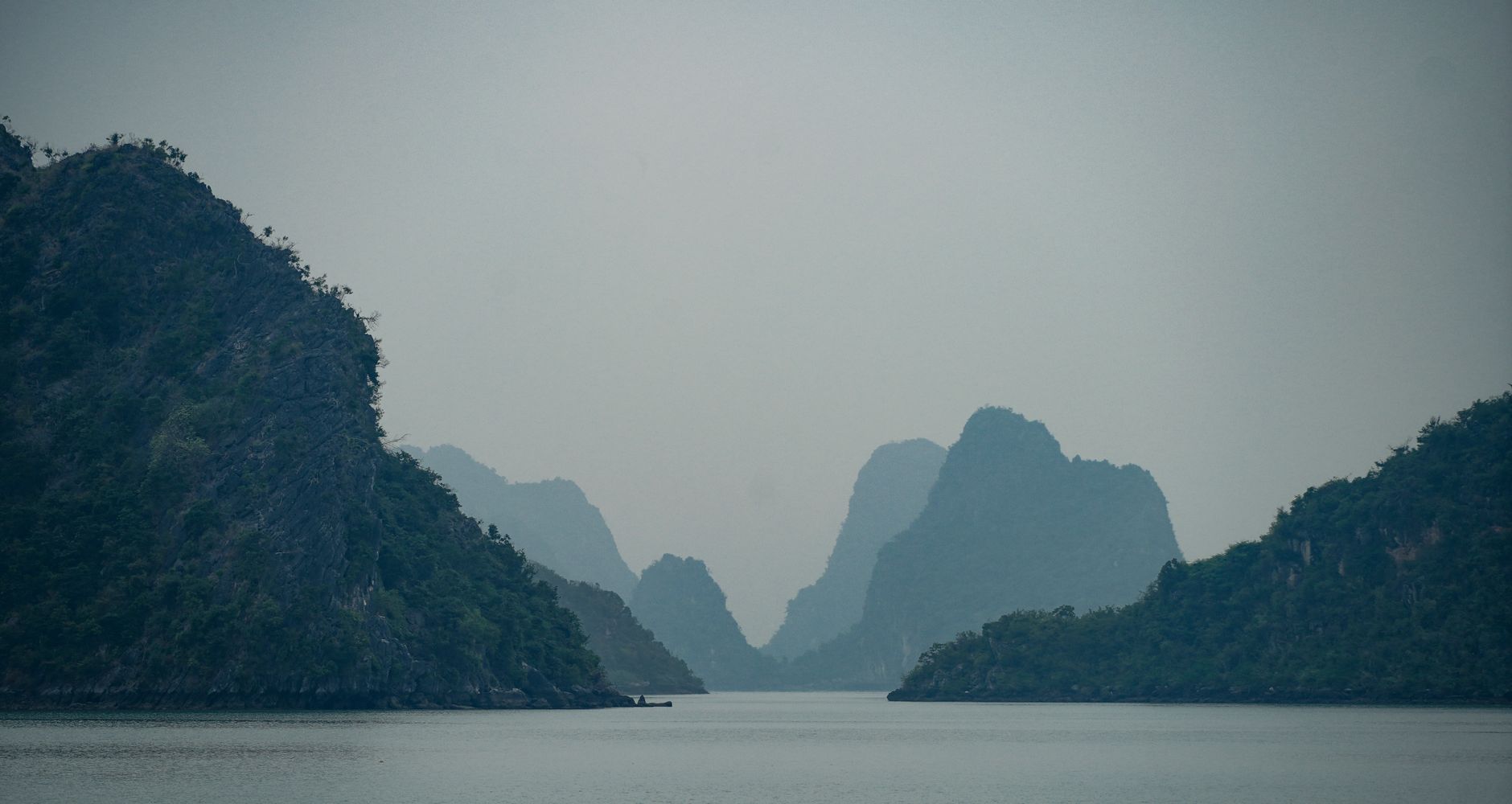
Ha Long Bay suffers from overtourism—there, I said it. The UNESCO World Heritage site draws millions annually, and the main harbor can feel like a parking lot. But the landscape itself—1,600 limestone karsts rising from emerald waters—justifies every cliché written about it.
The key is choosing your cruise carefully. Budget options ($80-120/person for two days) pack 40+ tourists onto aging boats with buffet lines and karaoke. Mid-range cruises ($150-250) cut group sizes to 16-20 and include kayaking through hidden lagoons. Luxury operators like Paradise Cruises ($400+) offer butler service and sunrise tai chi on the sundeck.
Book an overnight cruise, not a day trip. The real magic happens after the buses leave—swimming in bioluminescent waters at night, waking to mist curling around the karsts. If your budget allows, choose a route that includes Bai Tu Long Bay (east of the main area) or Lan Ha Bay (south toward Cat Ba Island). Same dramatic scenery, fraction of the crowds.
Pro tip: October through March brings occasional typhoons that cancel cruises with no refund. Check weather obsessively and book refundable rates.
Days 5-8: Hoi An (3 nights)
After Ha Long Bay's sensory overload, Hoi An feels like a deep exhale. This former trading port preserves a unique blend of Vietnamese, Chinese, Japanese, and French architecture— UNESCO recognized it precisely because the 15th-19th century streetscape survived when so many others fell to development.
The Ancient Town bans cars and motorbikes after 6 PM. Lanterns in gold, crimson, and jade reflect in the Thu Bon River. Tailors pull you into shops promising custom suits in 24 hours ($80-150) and silk dresses ($40-80). The sales pitches are aggressive, but the craftsmanship is genuine—many tailors trained in European houses before returning home.
By day, rent a bicycle ($2/day) and ride through rice paddies to An Bang Beach, 4 kilometers east. The water is warm, the sand clean, and beachside cafes serve $3 seafood lunches. Take a cooking class—Hoi An is Vietnam's culinary capital, and dishes like cao lầu (thick noodles with pork and greens) cannot be replicated elsewhere because the water must come from specific ancient wells.
Where to stay: Avoid the Ancient Town itself—noise carries through those thin walls. The Mulberry Collection Silk Eco on the river's edge offers $90/night rooms with balcony hammocks. Budget travelers love Tuna Homestay, 10 minutes by bike from town, where $25 gets you a private room and family-style dinners.

Day 8 (Optional): Hue Day Trip
If imperial history calls to you, hire a private car ($60-80) or join a group tour ($25) for the three-hour drive from Hoi An to Hue. Vietnam's former capital holds the sprawling Imperial City, where emperors ruled until 1945, and the Thien Mu Pagoda overlooking the Perfume River. The journey itself justifies the trip—the coastal Highway 1 winds through the Hai Van Pass, offering views that make you understand why Top Gear called it one of the world's best drives.
Skip this if you're feeling rushed. Hoi An rewards lingering, and Hue deserves more than a rushed afternoon.
Days 9-11: Ho Chi Minh City (3 nights)
HCMC—still called Saigon by locals—operates at triple Hanoi's speed. The motorbike traffic here makes the capital feel sleepy. But beneath the chaos lies Vietnam's economic engine, a city of rooftop bars, hidden speakeasies, and some of the world's best street food.
Start at the War Remnants Museum, but pace yourself. The photography exhibits—Agent Orange victims, the My Lai massacre, the fall of Saigon—are necessary context for understanding modern Vietnam, but emotionally devastating. Follow it with something lighter: the Cu Chi Tunnels, 70 kilometers northwest, where Viet Cong fighters lived underground for years. Touristy? Yes. Fascinating? Absolutely.
The real Saigon reveals itself at night. Ben Thanh Market closes at 6 PM, but the surrounding streets transform into an open-air food court. Follow your nose to Bui Vien Walking Street if you want backpacker energy, or to District 2's Thao Dien for craft cocktails in converted French villas. Banh mi sandwiches cost $1-2 at any street corner—Banh Mi Huynh Hoa on Le Thi Rieng Street serves the city's most famous, packed with seven types of cold cuts.
Where to stay: The Common Room Project in District 1 offers $35 private rooms in a social hostel environment. For boutique luxury, The Myst Dong Khoi runs $120/night with an infinity pool overlooking the skyline.
Days 12-14: Mekong Delta or Phu Quoc
With your final days, choose your ending. Culture seekers should head to the Mekong Delta, where the "Nine Dragon River" fans out into a water world of floating markets, fruit orchards, and stilt houses. Book an overnight homestay in Can Tho or Ben Tre—tourism companies arrange family accommodations where you'll eat river fish fresh from the boat and sleep in simple but clean rooms ($30-50 including meals).
Beach lovers should fly to Phu Quoc Island (45 minutes from HCMC, $40-80 roundtrip). Vietnam's largest island offers white sand, snorkeling, and the kind of resorts that cost triple on Phuket or Bali. Long Beach has budget bungalows; the southern tip holds luxury eco-resorts. Either way, watch the sunset from a beachfront bar—your reward for two weeks of movement.
Logistics: What You Need to Know
Visas and Entry Requirements
Good news for many travelers: Vietnam expanded visa-free access in 2023. UK citizens now get 45 days (previously 15). Germans, French, Spanish, and several other nationalities receive similar treatment. US citizens still need an e-visa—apply online through the official immigration portal ($25) or use a visa service for slightly more if you want hand-holding. Processing takes 3-5 business days. Your passport must be valid for six months beyond entry.
When to Go
Vietnam's geography creates three distinct climate zones, making weather planning infuriating. March and April offer the best compromise—warm enough in the north, dry in the central region, not yet brutally hot in the south. Avoid August through November, when typhoons drench the coast and can cancel Ha Long Bay cruises with 24 hours' notice. December through February brings cold drizzle to Hanoi (pack layers) but pleasant temperatures in the south.
Getting Around
Overnight trains between Hanoi and HCMC exist—I've taken them—but they consume precious time and the sleeper berths are cramped. For two-week itineraries, domestic flights are your friend. VietJet and Bamboo Airways connect major cities for $30-70 one-way. Book through 12Go.asia or directly with airlines.
Within cities, Grab (Southeast Asia's Uber) works everywhere. Motorbike taxis are cheaper but negotiate prices in advance if not using the app. In Hoi An and Hue, bicycles suffice.
Budget Breakdown (Per Person)
- Backpacker: $600-900 for two weeks. Dorm beds ($8-15/night), street food ($2-4/meal), buses instead of flights.
- Mid-range: $1,500-2,200. Private rooms in boutique hotels ($40-80/night), mix of street food and restaurants ($10-20/day), domestic flights for long distances, mid-range Ha Long Bay cruise.
- Luxury: $3,500-5,000. International hotels ($150-300/night), fine dining, private drivers, luxury cruise, spa treatments.
Vietnam remains one of Asia's great budget destinations—$30/day covers comfortable travel if you're strategic.
Common First-Timer Mistakes to Avoid
Trying to see everything: Da Lat, Phong Nha's caves, Sapa's rice terraces, the sand dunes of Mui Ne—all worth seeing, all impossible in two weeks without burnout. Save something for your return trip.
Booking the cheapest Ha Long Bay cruise: That $60 two-day trip includes a bus ride from hell, compulsory shopping stops, and 40 tourists crammed onto a boat with broken air conditioning. Spend the extra $80-100.
Ignoring the dress code at temples: Shoulders and knees must be covered. Carry a light scarf or sarango—many temples offer loaner coverings, but having your own saves time.
Drinking tap water: Even locals don't. Stick to bottled or filtered water, available everywhere for pennies.
Skipping travel insurance: Motorbike accidents are common among tourists. Ensure your policy covers riding (even as a passenger) and medical evacuation. World Nomads and SafetyWing both offer solid Vietnam coverage.
The Bottom Line
Vietnam does not reward checklist tourism. The country operates on its own rhythm—slower than you want in some moments, chaotically fast in others. This itinerary gives you the highlights while leaving breathing room for the unexpected: the grandmother who insists you try her bánh xèo, the sudden afternoon rain that sends you ducking into a cafe for three hours, the motorbike driver who becomes your unofficial tour guide.
Two weeks lets you sample Vietnam's depth without drowning in it. You will leave with photos of Ha Long Bay at sunrise, a custom suit from Hoi An, and a caffeine tolerance that alarms your doctor. More importantly, you will understand why veterans return to this country again and again—Vietnam gets under your skin in ways that defy explanation. The only cure is to start planning your second trip before the first one ends.
Have you traveled to Vietnam? Drop your favorite discovery in the comments—I'll be back for round three and need new secrets to chase.