
First Time in Peru? Here's the Perfect Machu Picchu & Sacred Valley Itinerary for 2026 (With Real Costs)
Reddit keeps asking: How many days do I need for Machu Picchu, Cusco, and the Sacred Valley? This 7-day itinerary prioritizes altitude acclimatization (Sacred Valley first, Cusco last) with real 2026 costs from $899 budget to $2,334 comfort.
Reddit keeps asking: "I'm planning my first trip to Peru—how many days do I need for Machu Picchu, Cusco, and the Sacred Valley? What's the smartest order to avoid altitude sickness?"
After analyzing dozens of trip reports and talking with guides on the ground in Cusco, here's the reality: most first-timers get the order wrong. They fly into Cusco (11,152 ft / 3,399 m), spend their first night dizzy and nauseous, then wonder why their Machu Picchu experience felt like survival rather than wonder.
This guide gives you a field-tested itinerary that actually works—one that prioritizes acclimatization, spreads the logistics sensibly, and delivers the full scope of Inca heritage without burning you out physically or financially.
Why the Order Matters: Altitude Is Your First Boss Fight
Cusco sits higher than any city most travelers have visited. The Sacred Valley towns—Ollantaytambo (9,160 ft / 2,792 m) and Urubamba (9,420 ft / 2,871 m)—are significantly lower. When you fly from Lima (sea level) directly to Cusco, you're jumping 11,000 feet in 90 minutes. Your body has no time to adapt.
The correct sequence: Lima → Sacred Valley (sleep low for 1-2 nights) → Machu Picchu → Cusco. This gives your body 48 hours at moderate altitude before tackling Cusco's elevation. You'll sleep better, breathe easier, and actually enjoy the experience instead of nursing altitude headaches.
The 7-Day Itinerary That Actually Works
This route assumes you fly into Lima and out of Cusco (or reverse). It balances acclimatization, key sites, and realistic pacing.
Day 1: Arrive in Lima, Connect to the Sacred Valley
Most international flights land in Lima in the evening. Rather than staying overnight, catch a morning flight to Cusco and arrange immediate transfer to the Sacred Valley. The drive from Cusco Airport to Ollantaytambo takes about 90 minutes—descending 2,000 feet in the process.
Stay in Ollantaytambo, not Cusco. This Inca-era town offers cobblestone streets, agricultural terraces you can climb, and a fraction of Cusco's altitude. Walk slowly. Drink coca tea (mate de coca). Sleep early.
Costs today: Lima-Cusco flight $80-150, private transfer to Sacred Valley $40-60, Ollantaytambo hotel $40-90/night.
Day 2: Sacred Valley Highlights—Ollantaytambo, Moray & Maras
Start with the Ollantaytambo ruins right in town. These Inca fortifications feature massive stone terraces and the Temple of the Sun—one of the few Inca sites that successfully resisted Spanish conquest (for a while). Morning light hits the terraces perfectly around 8 AM.
By late morning, hire a driver or join a tour to Moray and Maras. Moray features circular agricultural terraces that functioned as an Inca experimental farm—each level created a different microclimate. The engineering sophistication is genuinely mind-bending.
Maras showcases thousands of ancient salt ponds cascading down a hillside. Families have harvested pink salt here since before the Inca empire. The contrast of white salt against reddish earth makes for stunning photography.
Return to Ollantaytambo for a second night. Your body is still adapting—don't rush to higher altitude yet.
Costs today: Ollantaytambo ruins entrance (included in Boleto Turístico $45), Moray/Maras tour or driver $30-50, salt mine entry $5.
Day 3: Pisac Market & Transfer to Aguas Calientes
Visit Pisac in the morning—especially if it's a Tuesday, Thursday, or Sunday when the artisan market operates at full scale. The ruins above town feature some of the most extensive agricultural terraces in the Sacred Valley. The hike up is strenuous at altitude; take a taxi to the top and walk down.
By afternoon, return to Ollantaytambo and catch the PeruRail or Inca Rail train to Aguas Calientes (Machu Picchu town). The 90-minute train journey follows the Urubamba River through cloud forest—one of the most scenic rail segments in South America.
Aguas Calientes sits at 6,693 ft (2,040 m)—lower than anywhere else on your trip. Your lungs will celebrate.
Costs today: Pisac ruins (Boleto Turístico), train Ollantaytambo-Aguas Calientes $70-180 each way depending on service (Vistadome vs Expedition), Aguas Calientes hotel $50-150/night.
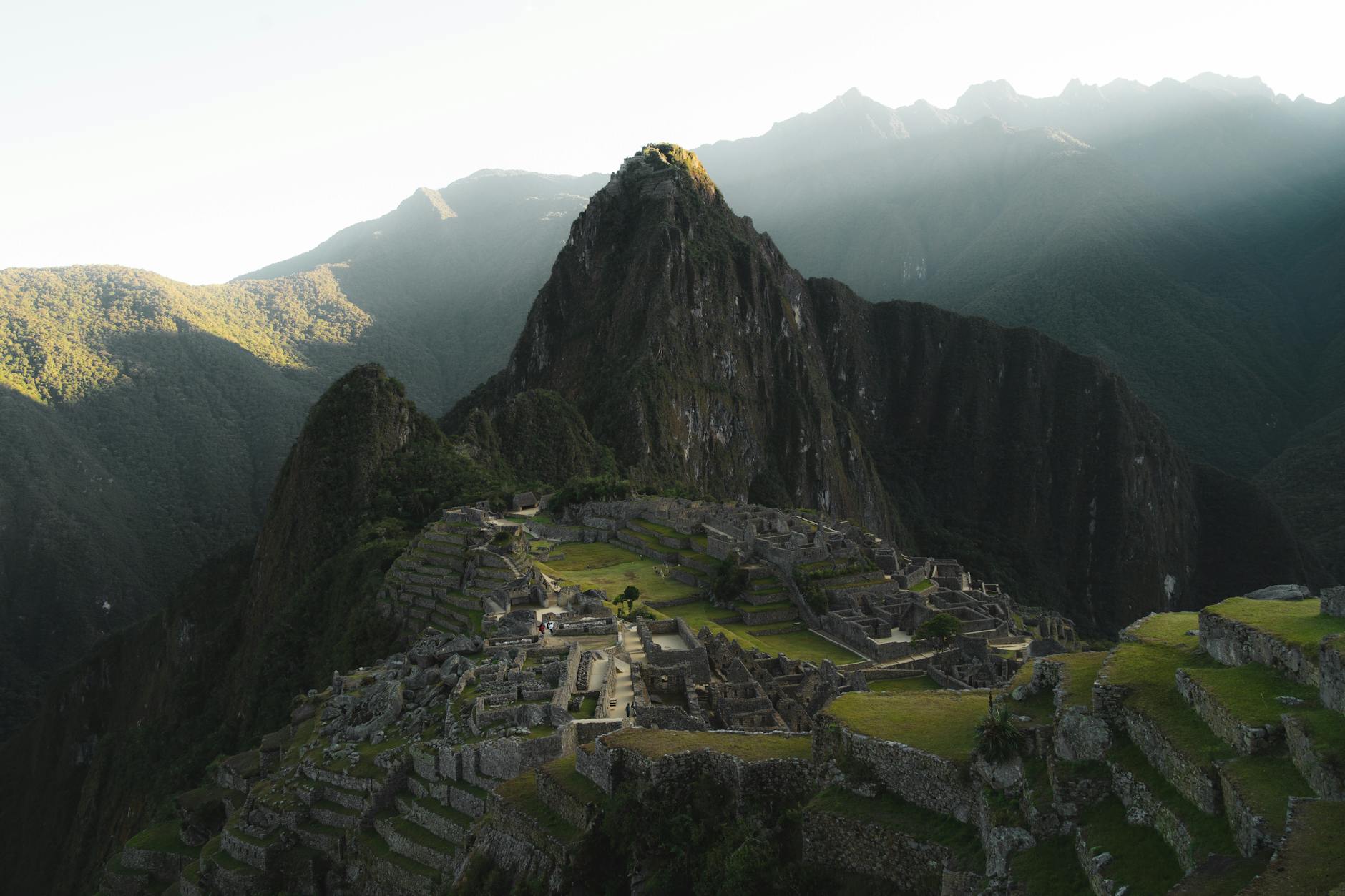
Day 4: Machu Picchu (The Main Event)
Here's what the brochures won't tell you: Machu Picchu tickets sell out weeks in advance during peak season (May-September). You cannot buy them at the gate. You need to book through the official government website or a verified reseller.
Entry options break into time slots:
- 6:00 AM – 12:00 PM morning entry
- 12:00 PM – 5:30 PM afternoon entry
Morning entry is superior. Clouds often obscure the ruins at sunrise, but by 8 AM, the mist typically clears revealing those iconic photographs. Afternoon brings crowds from the morning shift plus rising temperatures in the cloud forest.
Take the bus from Aguas Calientes ($24 roundtrip) rather than hiking the vertical 1,200 steps unless you're acclimatized and eager for a workout. Save your energy for exploring the citadel itself.
Inside, prioritize: the Intihuatana (sundial stone), Temple of the Sun, Main Plaza, and if you booked it, Huayna Picchu or Machu Picchu Mountain climbs. These require separate permits ($45-50 extra) and sell out even faster than main entry tickets.
Pro tip: Hire an official guide at the entrance ($20-30 for a small group) or pre-book. Guides provide context that transforms the site from "pile of old rocks" to "sophisticated astronomical observatory with engineering that shouldn't exist."
Costs today: Machu Picchu entry $45-50, bus $24 roundtrip, guide $20-30 optional, mountain climb permits $45-50 if booked.
Day 5: Return to Cusco—Now You're Ready
After Machu Picchu, take the morning train back to Ollantaytambo, then transfer to Cusco. Now—after four nights at moderate altitude—your body can handle Cusco's 11,000-foot elevation.
Spend the afternoon wandering the San Blas neighborhood, the bohemian arts district with narrow streets, workshops, and some of the city's best restaurants. Don't overexert. Short walks, frequent coca tea, light meals.
Costs today: Train return $70-180, transfer to Cusco $20-30, Cusco hotel $30-100/night.
Day 6: Cusco—The Imperial Capital
Cusco deserves a full day. Start at the Qorikancha (Temple of Gold)—the Inca's most sacred site, later converted into Santo Domingo monastery. The architectural fusion of Inca stone walls with Spanish colonial structures creates jarring contrasts.
Walk to Plaza de Armas, the city's colonial heart surrounded by arcades and the Cathedral. The Cusco Cathedral houses a famous Last Supper painting where Christ and disciples eat cuy (guinea pig)—a subtle indigenous resistance to Spanish religious imposition.
Climb to Sacsayhuamán (pronounced "sexy woman" by English-speaking travelers) for the afternoon. These fortress walls feature stones weighing up to 200 tons fitted together without mortar—so precisely you cannot insert a knife blade between them. The zigzag walls and elevated position provide panoramic Cusco views.
Evening: pisco sours and cuy al horno (roasted guinea pig) if you're culinarily adventurous, or lomo saltado (stir-fried beef) for the less daring. Cusco's restaurant scene punches far above its weight.
Costs today: Boleto Turístico $45 (covers Sacsayhuamán and multiple sites), Qorikancha entry $10, Cathedral $10, food $15-40.
Day 7: Rainbow Mountain or Departure
If you have a full day before flying out, Vinicunca (Rainbow Mountain) makes for an unforgettable—but physically demanding—day trip. The mountain sits at 17,060 ft (5,200 m). That's serious altitude.
Tours leave Cusco around 4:30 AM for the 3-hour drive. The 3-mile hike gains 1,300 feet to the viewpoint. Altitude affects everyone differently; some feel fine, others struggle to walk 50 meters. There's an optional horse rental for most of the ascent ($30-40).
The striped mineral deposits—reds from iron oxide, yellows from sulfur, greens from copper—create genuinely surreal landscapes. But the altitude is no joke. If you felt rough in Cusco, skip this.
Alternative: Visit Tipón or Pikillacta—lesser-visited ruins south of Cusco with minimal crowds and no 17,000-foot elevation.
Evening: Fly back to Lima for international connections.
Costs today: Rainbow Mountain tour $30-50 including transport and breakfast/ lunch, horse rental $30-40 optional.
The Real Budget Breakdown (Per Person, 2026)
| Category | Budget | Mid-Range | Comfort |
|---|---|---|---|
| Lima-Cusco flights (roundtrip) | $160 | $160 | $250 |
| Hotels (6 nights) | $240 | $420 | $720 |
| Machu Picchu entry | $50 | $50 | $95 (with mountain) |
| Train to Aguas Calientes (roundtrip) | $140 | $140 | $360 |
| Bus to Machu Picchu | $24 | $24 | $24 |
| Boleto Turístico (sites pass) | $45 | $45 | $45 |
| Meals (7 days) | $140 | $280 | $490 |
| Tours/Transport | $100 | $200 | $350 |
| Total | $899 | $1,319 | $2,334 |
Add $100-200 for souvenirs, emergency expenses, and the inevitable pisco sour fund. This assumes shared accommodations; solo travelers should add 30-50% to lodging costs.
Critical Logistics Most Guides Miss
Machu Picchu Entry Tickets
Book 4-6 weeks ahead for peak season (June-August), 2-3 weeks for shoulder season. The official site (ticketmachupicchu.gob.pe) frequently crashes for international credit cards. Consider reputable resellers like GetYourGuide or Viator if your card fails—expect $10-15 markup.
Train Tickets
PeruRail and Inca Rail release schedules 6 months out. Book early for morning departures. If tickets sell out, bus+bus+train combinations exist but add 3+ hours each direction.
Cash Requirements
Aguas Calientes has ATMs but they run out. Carry 400-500 soles ($100-130) in cash. Most Sacred Valley restaurants and small shops are cash-only. Cusco accepts cards more readily.
Best Time to Visit
May-September offers dry season certainty but maximum crowds. October-November and March-April provide compromise weather with fewer tourists. January-February bring rain and occasional Machu Picchu closures from landslides.
Altitude Sickness Prevention
Acetazolamide (Diamox) requires prescription in some countries—ask your doctor. Start 24 hours before ascent. Hydrate aggressively (3+ liters daily). Avoid alcohol the first 48 hours. Coca tea helps symptoms but isn't magic.
So What About the Inca Trail?
The classic 4-day Inca Trail requires permits that sell out 6+ months in advance for peak season. It's physically demanding, expensive ($700-900), and frankly unnecessary for most first-timers. The train+Machu Picchu day trip delivers 90% of the experience with 20% of the blisters.
If trekking is non-negotiable, consider the Salkantay Trek (no permit limits, lower cost, more altitude variation) or the 2-day Inca Trail (km 104 to Machu Picchu) which requires less advance planning.
Final Verdict
Peru for first-timers isn't about checking boxes—it's about managing altitude intelligently and accepting that the Inca built things we still struggle to explain. Get the sequence right (Sacred Valley first), book Machu Picchu tickets early, and budget $1,200-1,500 for a comfortable week.
The question isn't whether Peru is worth it. The question is whether you're ready to have your assumptions about ancient engineering permanently rearranged.