
First Time in South Korea? Here's the Perfect 2-Week Itinerary for 2026 (With Real Costs)
A complete 14-day South Korea itinerary for first-time visitors covering Seoul's urban energy, Gyeongju's ancient temples, Busan's beaches, and Jeju Island's volcanic landscapes. Includes real costs, transportation tips, and practical advice for 2026 travel.
South Korea has become one of the most requested destinations in travel forums, and it's easy to see why. Seoul's neon-lit streets pulse with K-pop energy and late-night BBQ joints. Gyeongju's ancient temples whisper stories from a thousand years ago. Busan serves up fresh seafood alongside golden beaches. And Jeju Island offers volcanic landscapes that feel worlds away from the mainland buzz.
But here's the thing about Korea: it's incredibly dense with experiences. Try to see everything in two weeks and you'll spend half your trip on trains, checking into new hotels every night, wondering where the vacation went. This itinerary takes a different approach. Four stops. Four distinct personalities. Enough time in each to actually feel the place rather than just photograph it.

The Route Overview: Seoul → Gyeongju → Busan → Jeju
This 14-day journey follows a logical southward path that minimizes backtracking while maximizing variety. Seoul gives you urban immersion and soft landing logistics. Gyeongju offers a history lesson wrapped in temple stays and traditional tea. Busan balances city energy with coastal relaxation. Jeju provides the island finale where slower rhythms feel earned rather than forced.
The Seoul to Gyeongju segment uses the KTX high-speed rail. Gyeongju to Busan is a quick regional train. Busan to Jeju requires a domestic flight (and yes, you should book this early). Jeju back to Seoul is another flight, or you could fly directly out of Jeju International Airport if your homeward journey allows.
Before You Book: Essential Preparations
South Korea has streamlined entry for most Western travelers. If you're from the US, UK, Canada, Australia, New Zealand, or EU countries, you don't need a K-ETA (Korean Electronic Travel Authorization) through December 31, 2026. You do, however, need to complete the free e-Arrival Card online within 72 hours of landing. Takes five minutes. Don't skip it.
Download Naver Map before you land. Google Maps works poorly for transit directions in Korea. Naver Map doesn't. Also grab Papago for translation, it outperforms Google Translate for Korean text and conversations.
Get a T-money card at the airport. The card costs ₩4,000 (about $3), and you'll want to load ₩10,000-20,000 immediately. This contactless card works on subways, buses, and even in convenience stores nationwide. Cash is increasingly unnecessary in Korea, credit cards work everywhere, but the T-money card remains essential for transit.
For connectivity, grab an eSIM before departure. Saily, Airalo, and Yesim all offer Korea packages starting around $11 for 5GB. Korea runs on constant connectivity: restaurant reservations, QR code menus, KakaoTalk messages, and navigation all demand data.
One critical booking: your Busan to Jeju flight. The Seoul-Jeju route is the world's busiest air corridor. Flights run constantly, but prices spike if you wait. Book 4-6 weeks ahead and expect to pay ₩40,000-70,000 ($30-50). Walk-up airport prices can triple.
Days 1-4: Seoul — The Electric Introduction
Seoul deserves four days minimum. First-time visitors often try to compress it into two, racing from palace to palace in a blur of hanbok photos and exhaustion. Don't. This city rewards wandering, neighborhood-hopping, and late-night food discoveries.
Day 1: Arrival and Orientation
Incheon Airport to Seoul takes 43 minutes on the AREX express train (₩11,000/$8) or about an hour on the all-stops version (₩4,500/$3.50). Both deposit you at Seoul Station, connected to the extensive subway network.
For your base, choose based on your travel style. Hongdae buzzes with university energy, street performances, and nightlife until 4 AM. Perfect for solo travelers and younger visitors. Myeongdong offers central location and endless shopping but feels tourist-heavy. Euljiro delivers local atmosphere with incredible food alleys and a more authentic Seoul experience.
Your first evening should be simple. Drop bags. Load your T-money card. Find a nearby BBQ joint and order samgyeopsal (grilled pork belly) with soju. Don't overplan. Jet lag hits differently in Korea.
Day 2: Palaces and Traditional Seoul
Start early at Gyeongbokgung Palace, the largest of Seoul's five royal palaces. Admission runs ₩3,000 ($2.25), but here's a pro tip: wear a hanbok (traditional Korean dress) and entry is free. Hanbok rentals cluster around the palace gates, costing ₩15,000-25,000 ($11-19) for four hours. You'll see hundreds of visitors posing in vibrant traditional clothing against the palace backdrops.
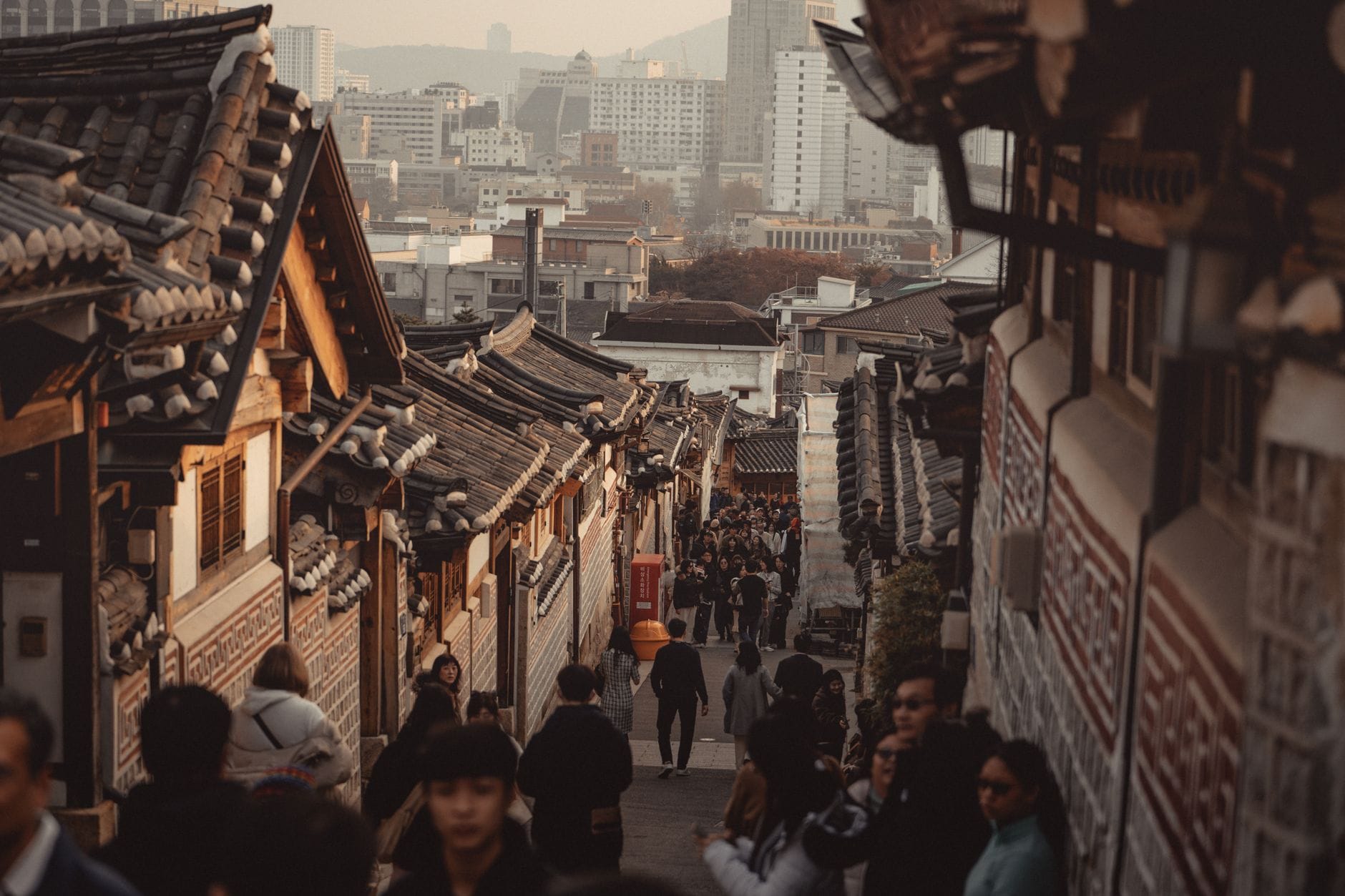
Walk from Gyeongbokgung north into Bukchon Hanok Village, where hundreds of traditional wooden houses (hanoks) line hillside alleys. This neighborhood illustrates Seoul's remarkable layering: 600-year-old architecture between modern cafes and galleries. The photo opportunities are endless, but be respectful. These are actual homes, not museum exhibits.
Continue to Insadong, the traditional culture district. Tea houses here serve brews brewed from the same recipes used centuries ago. This is the place for souvenirs that aren't mass-produced: hand-painted ceramics, calligraphy supplies, traditional paper crafts.
Day 3: Modern Seoul and Neighborhood Diving
Pick a neighborhood and commit to it. Itaewon offers international dining and expat energy with a tragic recent history (the 2022 crowd crush occurred here; the district has rebuilt respectfully). Seongsu-dong, the "Brooklyn of Seoul," warehouses converted into concept cafes and design studios. Apgujeong and Cheongdam provide luxury retail and K-pop agency sightings.
My recommendation: Hongdae by day, Itaewon by evening. Hongdae's independent boutiques, live street music, and student-priced restaurants showcase Seoul's creative youth culture. Then cross town to Itaewon for international cuisine that ranges from authentic Middle Eastern to Mexican to Ethiopian.
Day 4: Choose Your Adventure
Options abound. The DMZ tour (₩90,000/$68) offers genuine insight into Korean division, though recent tensions sometimes cancel tours without warning. Namsan Tower provides panoramic city views, especially spectacular at sunset. Lotte World Tower, Korea's tallest building, offers an observation deck on the 123rd floor.
Alternatively, simply wander. Seoul's charm lives in its alleyways: the pojangmacha (tented street food stalls) that appear at dusk, the noraebang (karaoke rooms) blasting K-pop hits, the convenience stores (CU, GS25, 7-Eleven) that somehow stock better food than most American restaurants.
Days 5-6: Gyeongju — The Museum Without Walls
The KTX train from Seoul to Gyeongju takes about two hours (₩40,000-50,000/$30-38). This former capital of the ancient Silla Kingdom delivers a complete change of pace from Seoul's intensity.
Gyeongju functions essentially as an open-air museum. The entire city is a UNESCO World Heritage site. Royal tombs shaped like grassy hills dot the town center. Bulguksa Temple, a 30-minute bus ride away, ranks among East Asia's most significant Buddhist sites. The Seokguram Grotto, carved into a mountainside, houses a stone Buddha that has serenely faced east for over a thousand years.
Stay in a hanok guesthouse. These traditional houses with heated floors (ondol) and paper-screen doors offer cultural immersion that hotels cannot replicate. Expect to pay ₩60,000-100,000 ($45-75) nightly, often including a traditional breakfast.
Don't miss the Cheomseongdae Observatory, the oldest surviving astronomical observatory in East Asia, built in the 7th century. Then rent bicycles (₩5,000/$4 daily) and explore the Daereungwon Tomb Complex, where 23 Silla royal tombs lie in a park-like setting.
Days 7-9: Busan — Beaches and Mountains
The train from Gyeongju to Busan takes under an hour (₩6,000/$4.50). Korea's second city combines urban density with immediate access to nature, creating a more relaxed rhythm than Seoul.
Day 7: Arrival and Haeundae Beach
Base yourself near Haeundae or Gwangalli beaches. Haeundae offers the famous wide sand beach and upscale atmosphere. Gwangalli provides a younger vibe with the dramatic Gwangan Bridge illuminating the bay at night.
Spend your first afternoon on the beach. Korean beach culture differs from Western norms: tents for rent, designated swimming zones, and food vendors wandering the sand selling everything from chicken skewers to fresh fruit cups. The East Sea (Sea of Japan) stays swimmable from June through September.
Day 8: Temples and Markets
Haedong Yonggungsa Temple sets dramatically on coastal rocks, waves crashing below the shrine platforms. Unlike Korea's mountain temples, this one faces the sea, creating a different spiritual atmosphere entirely. Busan Metro Line 2 connects almost directly.
Return to town for Jagalchi Fish Market, Korea's largest seafood market. The ground floor sells live creatures in tanks. Upper floors house restaurants where you select your fish downstairs and they prepare it upstairs. A seafood feast for two runs ₩40,000-80,000 ($30-60) depending on your selections. Try hoe (Korean sashimi), grilled eel, and spicy seafood stew.
Day 9: Gamcheon and Day Trip Options
Gamcheon Cultural Village cascades down hillsides in a riot of painted houses, murals, and art installations. Once a refugee settlement during the Korean War, it's now Busan's most Instagrammed neighborhood. Come early (before 9 AM) to avoid crowds.
Alternatively, take the bus to Taejongdae Resort Park for coastal hiking trails and dramatic cliff views. Or visit Beomeosa Temple in the northern mountains for a more contemplative temple experience.
Days 10-14: Jeju Island — The Volcanic Finale
The flight from Busan to Jeju takes about an hour (₩40,000-80,000/$30-60 if booked early). Jeju operates on island time. The pace slows. The landscapes open up. After nine days of cities and cultural sites, your body and brain will welcome this shift.
Jeju is large—it's Korea's largest island, roughly 70 kilometers across. Renting a car is ideal but requires an International Driving Permit. Without one, plan on taxis and limited bus routes, or book day tours. Accommodation clusters in Jeju City (north) and Seogwipo (south).
Day 10: Arrival and Jeju City
Land, collect baggage, and orient yourself. Jeju City offers the Dongmun Market for street food sampling and the Black Pork Street for the island's famous heukdwaeji BBQ. This isn't marketing hype; Jeju's black pigs genuinely taste different, fed on organic waste and raised freely on the island's volcanic soil.
Day 11: Hallasan National Park
Hallasan, Korea's highest peak, rises 1,950 meters from the island's center. The hike to the summit and back takes 8-9 hours. The crater lake at the top, Baengnokdam, fills with water seasonally and offers views across the entire island. Alternatively, shorter trails explore the mountain's flanks without the full summit commitment.
Day 12: Southern Coast and Waterfalls
Move south to Seogwipo, the island's second city and tourism hub. The Jungmun Resort area clusters multiple attractions: Cheonjiyeon and Jeongbang waterfalls (both drop directly to the ocean), Jusangjeolli Cliff's hexagonal basalt columns, and sandy beaches for recovery.
Day 13: Seongsan Ilchulbong and East Coast
Seongsan Ilchulbong, the "Sunrise Peak," is a UNESCO World Heritage tuff cone crater rising from the sea. The 20-minute climb to the rim offers sunrise views that justify the early wake-up. Nearby, the Seopjikoji coastal walk provides dramatic cliff scenery and views of the peak from sea level.
Consider the haenyeo (female divers) demonstration. These elderly women free-dive to depths of 20 meters without equipment, harvesting sea urchins, abalone, and octopus. The tradition is millennia-old and fading rapidly as younger generations choose easier careers.
Day 14: Departure or Extension
Fly back to Seoul for international connections, or depart directly from Jeju International Airport if possible. Alternatively, extend your stay. Jeju offers scuba diving, horseback riding on volcanic trails, and countless coastal cafes where you could easily lose another week.
Real Costs for 14 Days in South Korea
Accommodation ranges widely. Budget travelers using hostels and guesthouses can manage ₩35,000-50,000 ($26-38) nightly. Mid-range hotels and hanok stays run ₩80,000-150,000 ($60-115). Luxury properties in Seoul and beach resorts in Busan and Jeju climb to ₩200,000+ ($150+) nightly.
Food costs less than you'd expect. A hearty Korean meal at a local restaurant costs ₩10,000-15,000 ($7.50-11.50). Street food snacks run ₩2,000-5,000 ($1.50-4). Even Korean BBQ, the celebratory dining experience, costs ₩15,000-25,000 ($11-19) per person at neighborhood joints.
Transportation efficiently connects everything. Seoul subway rides cost ₩1,250-1,500 ($1-1.15). KTX high-speed trains between major cities run ₩20,000-50,000 ($15-38) depending on distance. Domestic flights to Jeju cost ₩40,000-120,000 ($30-90) depending on booking timing.
Attractions are refreshingly affordable. Palace admissions cost ₩3,000 ($2.25). Temple entries are often free or donation-based. Museums typically charge ₩3,000-5,000 ($2.25-4).
Total Budget Estimates (per person, excluding international flights):
- Budget (hostels, street food, minimal shopping): $1,200-1,600
- Mid-range (hotels, mix of casual and nice restaurants, some shopping): $2,200-3,000
- Comfortable (quality hotels, private transport where helpful, great food): $3,500-4,500
Practical Tips for First-Timers
Learn basic Korean phrases. Annyeonghaseyo (hello), kamsahamnida (thank you), and juseyo (please give me) go surprisingly far. Koreans appreciate the effort and often respond with warm encouragement.
Embrace convenience culture. Convenience stores in Korea are genuinely good. Triangle kimbap, instant ramen with fresh egg added, microwaveable rice bowls—the quality exceeds anything you'd find in Western convenience stores. When you're rushing between sights or arriving late, these become lifesavers.
Understand drinking culture. Soju is cheap (₩1,500/$1.15 per bottle in stores), potent, and omnipresent. The pouring etiquette matters: never pour your own drink, always pour for others. Hold your glass with two hands when receiving from elders. And pace yourself. Korean drinking sessions can extend for hours.
Respect the spa culture. Jimjilbangs (24-hour bathhouses) offer the ultimate Korean wellness experience. For ₩10,000-15,000 ($7.50-11.50), you get access to hot tubs, saunas, sleeping rooms, and often restaurants. The nudity (gender-segregated) surprises some Western visitors, but the experience is deeply restorative and culturally significant.
Download these apps: Naver Map (navigation), Papago (translation), KakaoT (taxis), and KakaoTalk (messaging, essentially mandatory for restaurant reservations).
South Korea rewards travelers who engage with its contrasts: hypermodern and deeply traditional, frenetic and contemplative, globally connected and distinctly unique. This two-week itinerary provides the structure for a first visit while leaving room for the spontaneous discoveries that make Korean travel memorable.
Sources
- Backpacking Is Life — 14 Day South Korea Itinerary 2026: Seoul, Gyeongju, Busan & Jeju
- Klook — 2-Week South Korea Itinerary: The Ultimate 14-Day Travel Guide
- The Sunrise Dreamers — Ultimate 2 week South Korea Itinerary: Best Places (2026)
- Two Week Traveller — 2 Weeks in South Korea Itinerary: 2 options, map, cost
- Travel With A Pen — 2-Week South Korea Travel Itinerary for First Time Visitors