
First Time in Italy? Here's the Perfect 2-Week Itinerary for 2026 (With Real Costs)
Planning your first trip to Italy? This complete 2-week itinerary covers Rome's ancient ruins, Florence's Renaissance art, Venice's canals, and the Amalfi Coast with real 2026 costs, train bookings, and day-by-day logistics.
So you're planning your first trip to Italy. You've seen the photos of Rome's ancient ruins, Florence's Renaissance art, Venice's winding canals, and the Amalfi Coast's cliffside villages. Now you need to figure out how to actually see it all without spending your entire vacation on trains or burning through your savings.
The classic two-week Italy circuit hits four distinct experiences: ancient Rome, Renaissance Florence, lagoon Venice, and the Mediterranean Amalfi Coast. Each represents a different Italy, and the journey between them is part of the experience. This itinerary is built around a realistic pace with three nights in Rome, three in Florence, two in Venice, and four on the Amalfi Coast, plus travel days that don't waste your time.
The Route at a Glance
Day 1-3: Rome
Day 4-6: Florence (with a Tuscany day trip)
Day 7-8: Venice
Day 9-13: Amalfi Coast via Naples
Day 14: Departure from Naples
This route moves north to south using high-speed trains for the Rome-Florence-Venice legs, then flies you back down to Naples to avoid retracing your steps. Total moving time between cities is under five hours, leaving you maximum time for actual exploration.
Days 1-3: Rome — The Eternal City
Day 1: Arrival and First Impressions
Most international flights land at Fiumicino Airport (FCO) in the morning. Take the Leonardo Express (€14, 32 minutes) directly to Termini Station. Resist the urge to nap. The fastest way to beat jet lag is to get into the city's rhythm immediately.
Drop your bags and head to Trastevere, the cobbled medieval neighborhood west of the Tiber River. This is where Romans actually eat and drink. Piazza Santa Maria in Trastevere is the heart of it, with locals gathering for evening passeggiata — the slow stroll that is as much social ritual as exercise.
For dinner, try Da Enzo al 29 if you can book ahead, or Tonnarello for hearty Roman classics without the reservation hassle. Order cacio e pepe — pasta with pecorino cheese and black pepper. It sounds simple because it is. That's the point.
Where to stay: Centro Storico puts you within walking distance of most major sights. Monti, just east of the Forum, offers slightly better value with the same access. Avoid the Termini area — convenient but charmless.
Expected costs: Mid-range hotel €120-180/night, dinner €25-40 per person
Day 2: Vatican City
The Vatican Museums and Sistine Chapel are non-negotiable. Book the earliest entry slot online at least 30 days ahead — €30 for standard entry, more for early-access tours. The route through the museums to the Sistine Chapel takes 3-4 hours minimum. There is no shortcut.
Michelangelo's ceiling is smaller than you expect and more powerful than you imagine. The Creation of Adam, that finger almost touching, is just one panel among dozens. The Last Judgment on the altar wall is darker, more chaotic, painted decades later when Michelangelo was a different man.
After the Sistine Chapel, exit into St. Peter's Basilica if your routing allows, or walk around to the main entrance. Climbing the dome (€10) rewards you with a panorama that helps you understand Rome's layout — the Tiber curling through the city, the ruins scattered like toys.
Lunch in the Borgo neighborhood near the Vatican. Walk to Castel Sant'Angelo, then across Ponte Sant'Angelo to the historic center. End your day at Piazza Navona and the Pantheon. The Pantheon's interior — a perfect sphere, open to the sky through the oculus — has been inspiring architects for two thousand years.
Pro tip: The Pantheon now requires a timed-entry ticket (€5). Book ahead or risk waiting in line for an hour.
Expected costs: Vatican entry €30, dome climb €10, Pantheon €5, lunch €15-25
Day 3: Ancient Rome
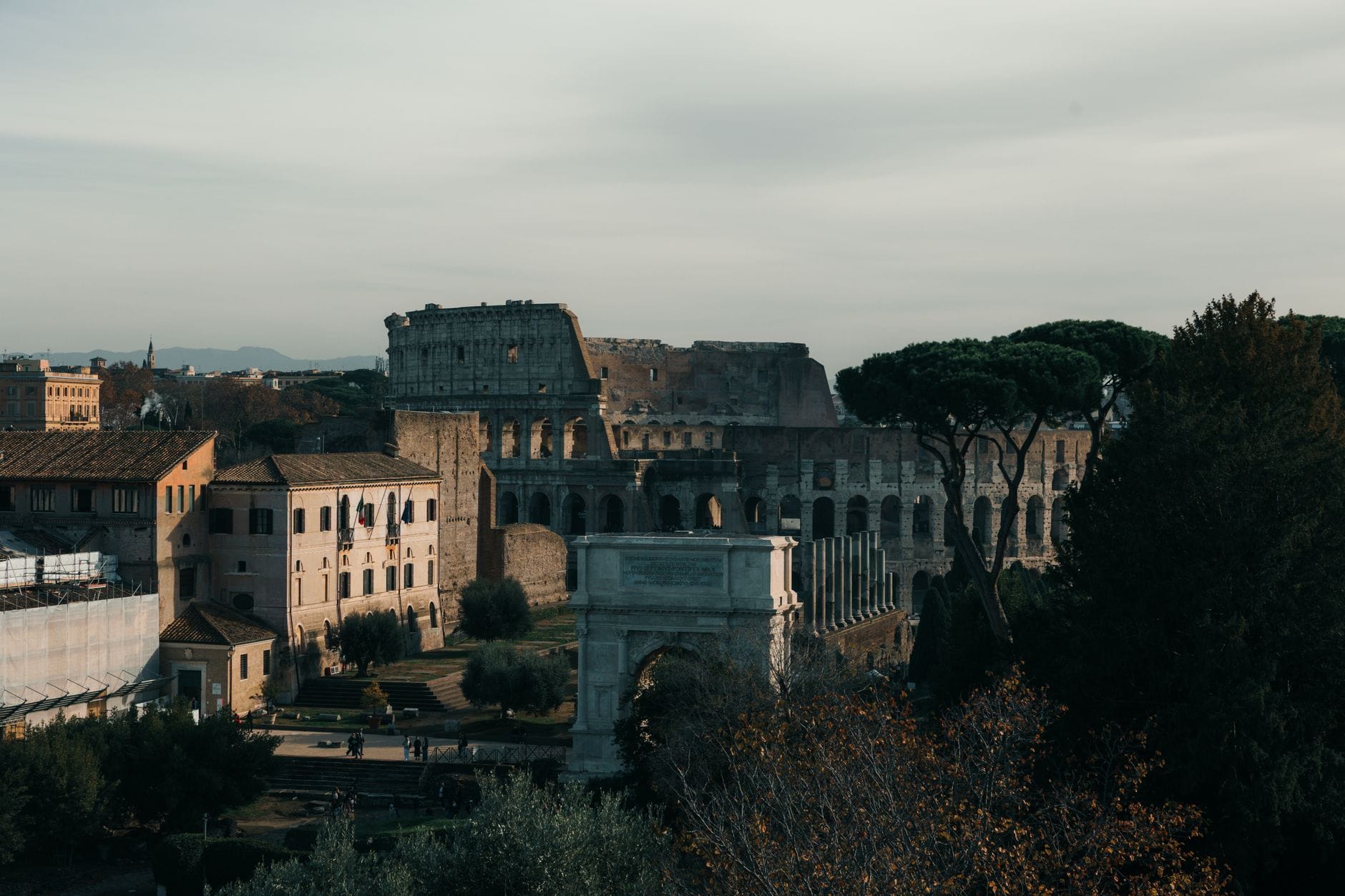
The Colosseum, Roman Forum, and Palatine Hill share a combo ticket (€18, valid 24 hours). Book at coopculture.it well in advance. The underground/arena floor add-on (€24 total) lets you walk where gladiators waited and fighters entered. Worth it.
Start at the Colosseum at 8:30 AM when it opens. The morning light on the travertine stone is golden. By 10 AM the tour groups arrive and the magic dissipates.
From the Colosseum, walk directly into the Roman Forum. This was the heart of ancient Rome — temples, basilicas, the Senate house. The Via Sacra, the sacred way, still has its original paving stones. You are walking the same path as Caesar and Augustus.
Climb to the Palatine Hill for views back over the Forum. This is where Rome's emperors built their palaces. The word "palace" comes from this hill.
By early afternoon you will have walked perhaps 10 kilometers on uneven stones. Pace yourself. Late afternoon options: the Capitoline Museums if you have art energy left, or simply wander to Piazza Venezia and the Trevi Fountain. Toss a coin over your shoulder. Legend says it guarantees your return to Rome.
Expected costs: Combined ticket €18-24 depending on add-ons, gelato €4-6
Days 4-6: Florence — The Cradle of the Renaissance
Day 4: The Journey North
The Frecciarossa or Italo high-speed train from Roma Termini to Firenze Santa Maria Novella takes 1 hour 35 minutes. Book 30+ days out for fares around €30; last-minute tickets can hit €60. Use trenitalia.com or italotreno.it directly. Third-party resellers add fees.
Arrive around lunchtime. Drop bags and find a panino — All'Antico Vinaio draws lines for a reason, but any small enoteca will serve you something excellent without the wait.
Afternoon: walking tour of central Florence. Piazza del Duomo to see Brunelleschi's dome dominating the skyline. The cathedral exterior is a riot of green, white, and pink marble. Piazza della Signoria for the open-air sculpture gallery and the fortress-like Palazzo Vecchio. Cross the Ponte Vecchio, the medieval bridge where goldsmiths still sell their wares.
Evening aperitivo in Santo Spirito or Sant'Ambrogio, neighborhoods where students and locals mix. Dinner at Trattoria Mario if you can handle lunch-only hours and no reservations, or nearby alternatives for a more relaxed experience.
Expected costs: Train €30-60, hotel €100-160/night, dinner €20-35
Day 5: The Uffizi and Florence's Heart
The Uffizi Gallery requires advance booking. This is where Renaissance art lives — Botticelli's Birth of Venus, Leonardo's Annunciation, Caravaggio's Medusa. The building itself, designed by Giorgio Vasari in the 16th century, is a masterpiece.
Plan 3-4 hours minimum. The chronological arrangement lets you watch artistic techniques evolve — the development of perspective, the mastery of oil painting, the shift from religious iconography to humanist portraiture.
Afternoon: climb Brunelleschi's dome (€10) or Giotto's bell tower (€10) for views over the terracotta rooftops. Visit the Accademia Gallery if seeing Michelangelo's David is essential — book ahead, €16.
Evening: walk to Piazzale Michelangelo for sunset. The view of Florence spread below, the Duomo rising above the city, the hills of Tuscany beyond — this is why people fall in love with Italy.
Expected costs: Uffizi €20, dome or tower climb €10, Accademia €16
Day 6: Tuscany Day Trip — Siena and San Gimignano
Rent a car or join a small-group tour. The roads winding through Chianti country reveal a different Tuscany than Florence — rolling hills striped with vineyards, stone farmhouses, cypress-lined driveways.
Siena's Piazza del Campo is one of Europe's finest medieval squares. The Palio horse race happens twice each summer, but the square's shell shape and surrounding palaces impress year-round. Climb the Torre del Mangia for views.
San Gimignano is the Manhattan of Tuscany — medieval skyscrapers built by rival families to demonstrate wealth and power. Fourteen towers remain from an original seventy-two. The town is touristy but undeniably picturesque. Try the locally-made gelato at Gelateria Dondoli, world champion flavors.
Return to Florence for your final evening. Dinner in the Oltrarno, the artisan quarter across the river, where workshops still produce leather goods, gold jewelry, and hand-marbled paper using centuries-old techniques.
Expected costs: Car rental €60-80/day or tour €80-120 per person, lunch €15-25
Days 7-8: Venice — The Floating City
Day 7: Arrival and Getting Lost
The train from Florence to Venice Santa Lucia takes 2 hours. Book early for €20-30 fares. The approach into Venice — tracks extending over the lagoon, water suddenly surrounding you — never gets old.
Venice rewards wandering. The major sights are clustered, but the real magic is in the quiet calli (alleys) and empty campi (squares) where tourists rarely venture. Get deliberately lost. The city is small enough that you'll eventually hit water and reorient.
Afternoon: St. Mark's Square. The basilica's gold mosaics shimmer in the afternoon light. The Doge's Palace, with its Gothic facade and grim prison cells, tells Venice's story of maritime power and political intrigue. The Bridge of Sighs connects palace to prison — the view through the stone lattice was the last convicts saw of Venice before their cells.
Evening: spritz at a canal-side bar as the light fades. The Aperol Spritz originated here — Prosecco, Aperol, soda water, orange slice. Order cicchetti, Venetian small plates similar to tapas, at a bacaro wine bar.
Where to stay: Cannaregio or Dorsoduro for better value than San Marco. Venice is small; nothing is more than a 30-minute walk.
Expected costs: Train €20-40, hotel €130-200/night, spritz €4-6
Day 8: Islands and Farewell
Morning: Murano, the glass-making island. Watch demonstrations of molten glass transformed into delicate sculptures in minutes. The technique hasn't changed in centuries. Buy from the workshops if you want authentic pieces; street vendors sell Chinese imports.
Burano, with its candy-colored houses, is worth the additional vaporetto ride if you have time. The lace-making tradition here dates to the 16th century.
Afternoon: gondola ride if your budget allows (€80-100 for 30 minutes), or simply walk the Rialto Bridge and explore the market area. The Grand Canal reveals Venice's architectural history — Byzantine, Gothic, Renaissance, Baroque facades stacked side by side.
Evening: flight to Naples (€50-80, about 1 hour). Airlines like easyJet and ITA Airways run multiple daily flights. Alternatively, the train back to Rome and down to Naples takes 6+ hours — not recommended.
Expected costs: Vaporetto day pass €25, gondola €80-100, flight €50-80
Days 9-13: The Amalfi Coast — Mediterranean Dreams
Day 9: Naples and Transfer to Sorrento
Land at Naples Capodichino Airport. Take the Curreri Viaggi bus (€10) or a private transfer (€30-40 per person) to Sorrento, your base for the Amalfi Coast. Sorrento has better train connections and more accommodation options than Positano or Amalfi town.
Afternoon: explore Sorrento's old town. Limoncello shops offer free tastings of the lemon liqueur that has become synonymous with the coast. The Cloister of San Francesco offers quiet gardens and occasional evening concerts.
Dinner: seafood at a waterfront restaurant. The bay of Naples stretches before you, Vesuvius looming on the horizon.
Expected costs: Transfer €10-40, hotel €100-180/night, dinner €25-45
Day 10: Pompeii and the Shadow of Vesuvius
The Circumvesuviana train from Sorrento to Pompeii Scavi takes 30 minutes. The archaeological site is vast — plan 4-5 hours minimum. A guide or audio guide is essential; the ruins make little sense without context.
Walking Pompeii's stone streets, stepping into ancient homes, seeing the plaster casts of victims frozen in their final moments — this is emotional archaeology. The Villa of the Mysteries, on the site's edge, preserves extraordinary frescoes of a mysterious initiation rite.
Afternoon: return to Sorrento or continue to Naples for the National Archaeological Museum, where many of Pompeii's finest mosaics and frescoes are preserved.
Expected costs: Pompeii entry €18, train €3 each way, guide €15-20
Day 11: Positano and Amalfi
The SITA bus along the Amalfi Drive is legendary — terrifying, beautiful, not for the faint of heart. Hairpin turns, sheer drops, views that make you gasp. Sit on the right side going from Sorrento to Positano for the best views.
Positano cascades down the cliffside in pastel tiers. The beach is pebbly but the setting is unmatched. Climb the steps through town, browse the linen boutiques, have lunch with a view at a cliffside restaurant.
Continue to Amalfi town by bus or ferry. The Duomo dominates the small piazza, its striped facade and grand staircase impossible to miss. The town was once a maritime power, rivaling Venice and Genoa.
Expected costs: Bus €2-4 per ride, ferry €15-25, lunch €20-35
Day 12: Capri
Ferries from Sorrento to Capri take 25 minutes. The island divides into Capri town, with its piazzetta and designer boutiques, and Anacapri, the quieter, higher village.
The Blue Grotto is Capri's most famous attraction — a sea cave where sunlight refracts through the water creating an ethereal blue glow. Go early; lines form quickly. Alternatively, take the chairlift from Anacapri to Monte Solaro for panoramic views.
Afternoon: the Gardens of Augustus offer postcard views of the Faraglioni rock formations. Wander the Via Krupp, a dramatic switchback path carved into the cliffside.
Expected costs: Ferry €20-25 round trip, Blue Grotto €14, chairlift €11
Day 13: Ravello and the High Life
Ravello sits high above the coast, accessible by bus from Amalfi. Wagner, Virginia Woolf, Gore Vidal — artists and writers have long sought refuge here.
Villa Rufolo's gardens inspired the garden of Klingsor in Wagner's Parsifal. Villa Cimbrone's Terrace of Infinity offers what is arguably Italy's most famous view — the coastline stretching to the horizon, the sea merging with sky.
This is your slow day. Long lunch, lingering over wine, watching the light change on the water. The Amalfi Coast is about beauty and pleasure. Allow yourself both.
Expected costs: Villa Rufolo €7, Villa Cimbrone €10, lunch €25-40
Day 14: Departure
Morning: last espresso, last pastry, last walk through Sorrento's lemon-scented streets. The Curreri Viaggi bus returns to Naples airport in about 75 minutes.
Alternatively, if your flight allows, spend the morning at Naples' Archaeological Museum or exploring the Spaccanapoli neighborhood — the narrow street that "splits Naples" with its chaos, street food, and lived-in Baroque churches.
Budget Breakdown
Accommodation (13 nights):
Budget (hostels, basic hotels): €900-1,300
Mid-range (3-star hotels, B&Bs): €1,600-2,400
Luxury (4-5 star hotels): €3,500-6,000
Transportation within Italy:
Trains (Rome-Florence-Venice): €80-150
Flight Venice-Naples: €50-100
Local transport (buses, ferries, metro): €100-150
Attractions and activities:
Museums, sites, guided tours: €400-600
Food and drink:
Budget (pizza, street food, grocery): €600-900
Mid-range (mix of trattorias and nice restaurants): €1,200-1,800
Luxury (fine dining, wine): €2,500-4,000
Total for two people (mid-range): €4,200-6,800 before international flights
Essential Booking Tips
Train tickets: Book 30+ days ahead for the cheapest fares on Trenitalia and Italo. High-speed trains sell out on popular routes.
Museums: Vatican Museums, Uffizi Gallery, Colosseum, and Pompeii all require advance booking. The official websites are coopculture.it and museivaticani.va.
Accommodation: Book 2-3 months ahead for May, June, September, and October. July and August are peak season with higher prices and crowds.
Best months: May, June, late September, and early October offer the best balance of weather and manageable crowds. July and August are hot and crowded. November through March can be rainy but offers lower prices and fewer tourists.
What to Pack
Comfortable walking shoes with good grip — Italian streets are uneven cobblestones. Modest clothing for churches (shoulders and knees covered). A light scarf serves multiple purposes. Portable phone charger — you'll use your phone for maps, tickets, and translations. Refillable water bottle — Rome has free public fountains with excellent drinking water.
The Reality Check
Italy will frustrate you. Trains will be delayed. Restaurants will be closed when Google says they're open. You'll wait in lines you thought you avoided by booking ahead. The sheer volume of tourists in peak season can feel overwhelming.
But then you'll turn a corner in Rome and see the Colosseum glowing in the afternoon light. You'll stand before Botticelli's Venus and understand why people have made pilgrimages to see her for centuries. You'll sip wine on a Amalfi Coast terrace as the sun sets over the Mediterranean and realize that yes, places this beautiful actually exist.
Italy rewards patience and preparation. Do the work — book ahead, arrive early, learn a few phrases of Italian — and the country opens itself to you. Your first trip to Italy won't be your last.
Have questions about this itinerary? Drop them in the comments below.